🌼 Flower of the Day: Daffodil

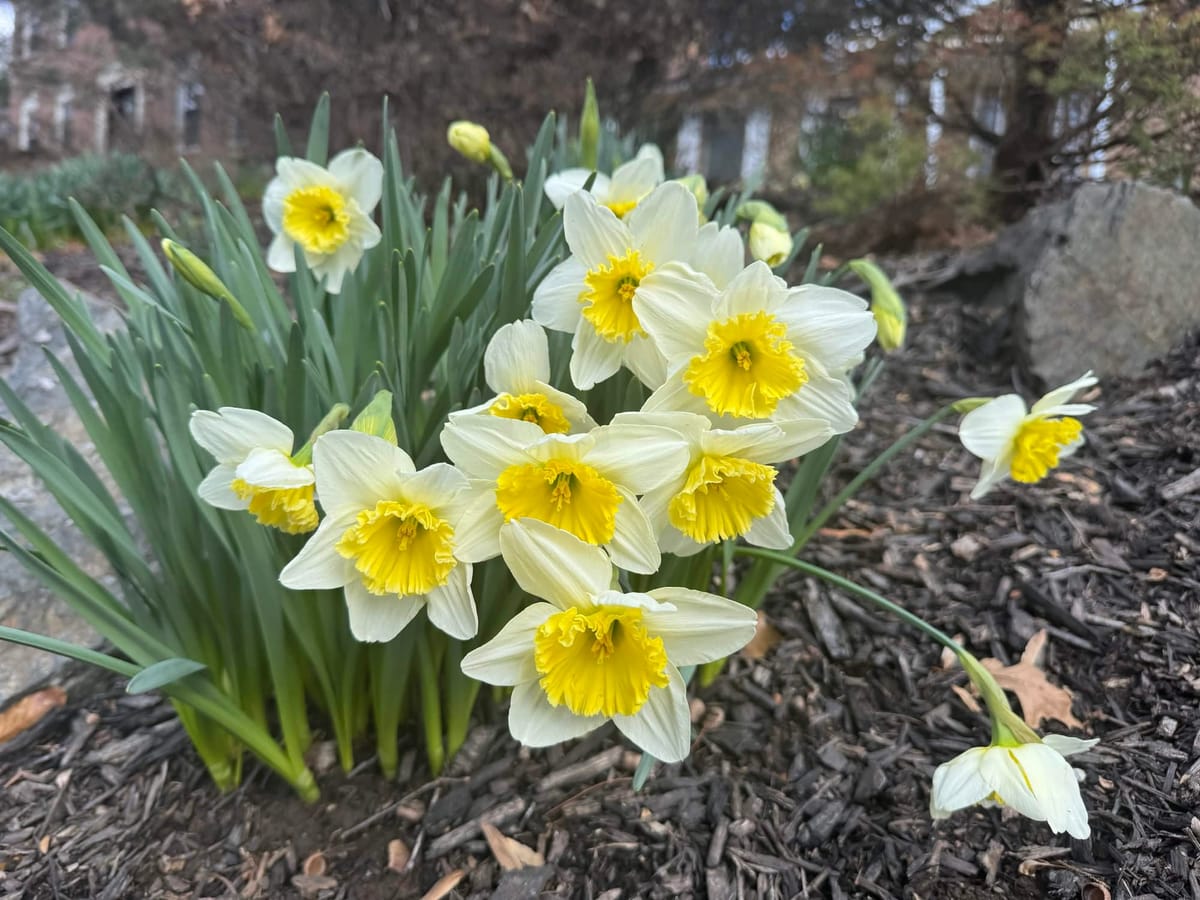
Thomas Jefferson grew these at Monticello. Every spring, they still bloom there — and in your neighbor's yard, and along the parkway medians, and in that wooded patch you drive past without noticing.
They're back. And they brought thousands of years of history with them.
What You're Looking At:
These white-and-yellow trumpets are likely 'Ice Follies' or 'Carlton' — classic large-cupped varieties. In Victorian flower language, daffodils meant "new beginnings" and "regard." Appropriate for March, when everything feels possible again.
The Journey Here:
Native to the Mediterranean, daffodils traveled to England with the Romans around 300 AD. By the time Wordsworth wrote his famous poem in 1804, they'd naturalized so well across the British Isles that many thought them native. Early American colonists brought them here in the 1600s — the bulbs traveled well on ships, survived harsh winters, and multiplied easily. Jefferson planted them. Settlers carried them west. Now they're as American as crabapples and forsythia.
Why Daffodils Matter for Overwhelmed Gardeners
Daffodils are the perfect starter plant for people who feel behind or overwhelmed. Here's why:
- Plant once, enjoy for decades. No yearly replanting, no fuss.
- Completely ignore them all summer. They die back and rest while you focus on other things.
- Zero maintenance. No staking, no pruning, no special feeding.
- They always come back. Even if you did everything "wrong" last year, they're here to tell you spring arrived anyway.
That's the lesson daffodils teach: You don't have to be perfect. You just have to start.
Growing Tips for 20854:
- Plant bulbs 6" deep, pointy side up, in October
- Let foliage die back naturally — that's how they store energy
- Don't braid or tie leaves; they need sun to photosynthesize
- Naturalize beautifully in lawns if you don't mow until leaves yellow
Spot Them:
Everywhere right now — Potomac front yards, Bethesda medians, Cabin John woods. The show lasts 3-4 weeks.
That cheerful clump in your yard? It's carrying Greek myths, Roman gardens, English poetry, and colonial determination — all wrapped up in a flower that keeps showing up every March to tell us winter is ending.
Want Daffodils in Your Yard Next Spring?
The time to plant is October — when you're sick of gardening and ready to be done for the year. That's when we plant the bulbs that will surprise you next March.
→ Book a Fall Bulb Planning Session — We'll assess your space and create a plan for spring blooms that return every year, no maintenance required.
What daffodils are blooming near you?